
Medically reviewed by Dr. Shaivalini Kamarapu, MBBS, MS (Obstetrics & Gynaecology), Fellowship in Reproductive Medicine, 20+ years of clinical experience.
What is endometriosis surgery?
Endometriosis is a condition in which tissue similar to the lining of the womb grows outside the womb: on the ovaries, fallopian tubes, the lining of the pelvis, and sometimes the bowel or bladder. It can cause severe period pain, pain during intercourse, chronic pelvic pain and difficulty getting pregnant.
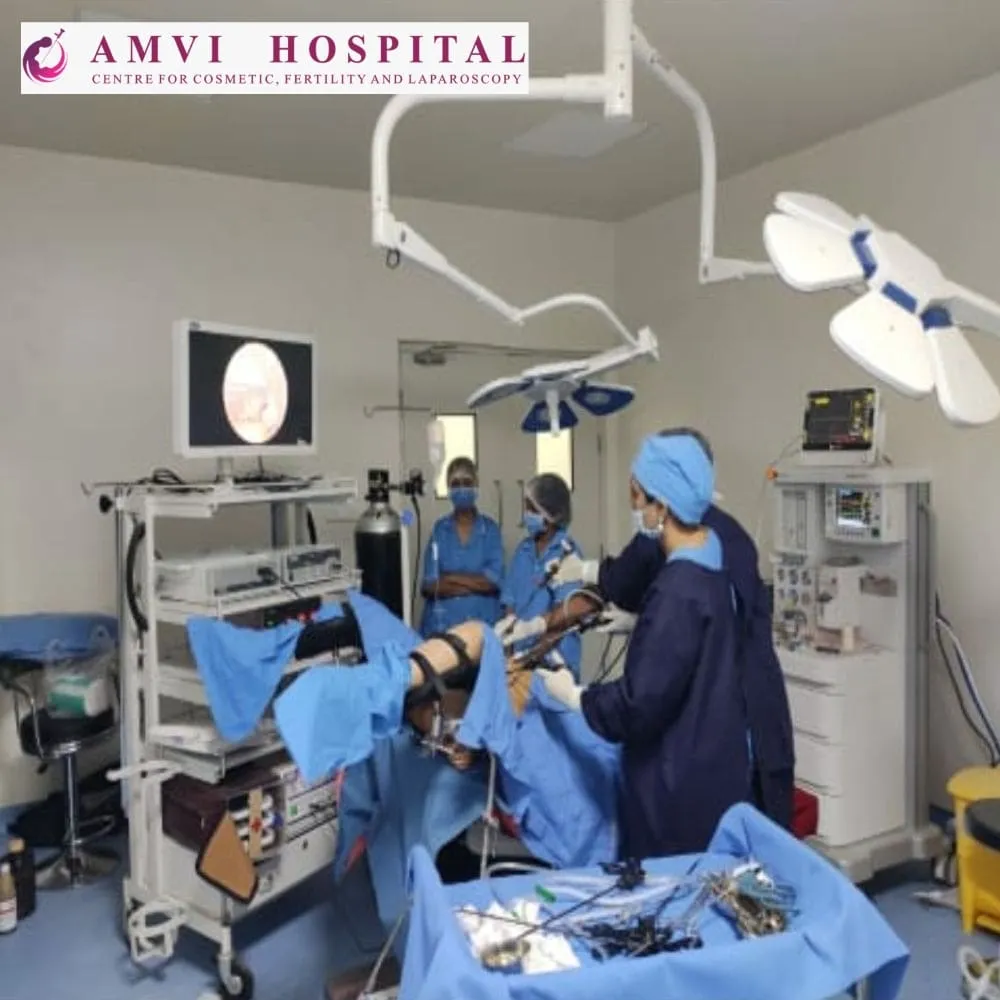
Endometriosis surgery is usually done laparoscopically (keyhole surgery). Through a few small incisions, the surgeon uses a camera to confirm the diagnosis, then removes or destroys the endometriosis, removes endometriosis cysts on the ovaries (endometriomas, also called chocolate cysts) and frees organs that are stuck together by scar tissue (adhesions).
When is surgery recommended?
Many women manage endometriosis well with medicines. Surgery is usually considered when:
- Pain is not controlled by hormonal treatment or painkillers
- There is an endometrioma (chocolate cyst) on the ovary that is large or growing
- Endometriosis may be affecting your fertility
- Deep endometriosis is affecting the bowel, bladder or other organs
- The diagnosis needs to be confirmed
Types of endometriosis surgery
Diagnostic laparoscopy
A look inside the pelvis to confirm endometriosis and see how far it has spread. Small areas are often treated at the same time.
Excision of endometriosis
Cutting out the endometriosis tissue. Excision gives tissue for testing and is preferred for deep endometriosis.
Ovarian cystectomy for endometrioma
Removing the chocolate cyst while preserving as much healthy ovarian tissue, and egg reserve, as possible.
Adhesiolysis
Separating scar tissue that binds the ovaries, tubes, womb and bowel together, which can relieve pain and help fertility.
Robotic-assisted surgery
For complex or deep endometriosis, robotic assistance gives a magnified 3D view and very precise instruments.
Hysterectomy
For women who have completed their family and have severe symptoms, removing the womb (often with laparoscopy) may be discussed.
Endometriosis surgery and fertility
For women who want to conceive, surgery is planned to protect fertility. Removing endometriosis and adhesions can improve the chance of natural conception for some women. Because surgery on the ovaries can reduce egg reserve, your AMH (egg reserve) is usually checked first, and the approach to any ovarian cyst is planned carefully.
Depending on your age, egg reserve and the extent of the disease, your doctor may recommend trying naturally after surgery, or moving to IUI or IVF. Some women go straight to IVF without surgery. The plan is made with you.
Before and after surgery
- Before surgery: a pelvic ultrasound (and sometimes an MRI), blood tests and, if fertility matters to you, an AMH test
- Most women stay in hospital for 1–2 days
- Mild abdominal or shoulder-tip pain for a few days is common
- Most women return to light activities and desk work within 1–2 weeks
- Hormonal treatment after surgery may be advised to lower the chance of endometriosis coming back
Like any surgery, endometriosis surgery has risks, including bleeding, infection and, rarely, injury to the bowel, bladder or blood vessels. Endometriosis can also come back after surgery. Your surgeon will explain your own risks before you decide.
Endometriosis surgery at AMVI Hospitals
Endometriosis surgery at AMVI Hospitals is led by Dr. Shaivalini Kamarapu, an advanced laparoscopic and robotic surgeon with a Diploma in Advanced Endometriosis Care and Robotic Surgery. With fertility, IVF and surgical care under one roof, your treatment can be planned around both your pain and your plans for a family.
Frequently asked questions
Surgery can remove visible endometriosis and relieve pain for many women, but endometriosis can come back. Hormonal treatment after surgery and regular follow-up help lower the risk of recurrence.
For some women, removing endometriosis and adhesions improves the chance of natural conception. If you have reduced egg reserve or other fertility factors, IUI or IVF may still be advised. Your doctor will plan surgery and fertility treatment together.
Most women stay 1–2 days in hospital and return to light activities and desk work within 1–2 weeks. Recovery can take longer after extensive or deep endometriosis surgery.
Yes. Most endometriosis surgery is done by laparoscopy (keyhole surgery) through a few small incisions. Robotic-assisted surgery may be used for complex or deep endometriosis.
It can, because some healthy ovarian tissue may be removed with the cyst. That is why your AMH is usually checked before surgery and the operation is planned to preserve as much of the ovary as possible.