

Ovarian Cancer Treatment — Gynecologic Oncology Experts
Written & medically reviewed by Dr. Shaivalini Kamarapu
MBBS · MS (Obstetrics & Gynaecology) · Fellowship in Reproductive Medicine · 20+ years of clinical experience
20+
Years of Experience
20,000+
Successful Surgeries
30,000+
Happy Families
What is ovarian cancer?
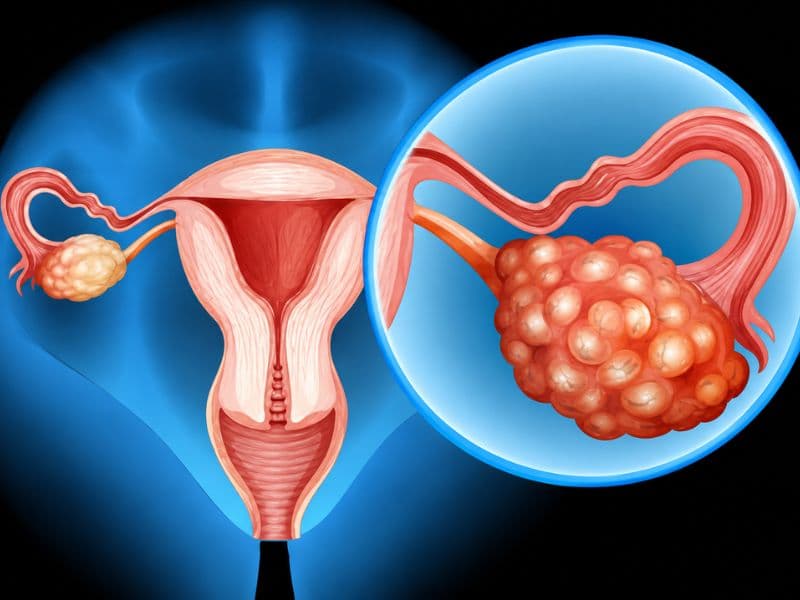
Ovarian cancer is the second most common type of gynaecologic cancer. The ovaries are two small organs present in all females which are the source of egg cells, located in the pelvic area. Ovarian cancer refers to cancer that arises from these organs — a condition where normal cells become abnormal, grow and multiply uncontrollably, and gain the ability to spread throughout the body.
What are the types of ovarian cancer?
Differentiated by the kind and type of cells in which cancer starts, there are three main types:
Epithelial Ovarian Tumours
Develop from the cells that cover the surface of the fallopian tube or the ovary.
Germ Cell Ovarian Tumours
Derived from the ova, or egg-producing cells — most of these are not even cancerous.
Cord-Stromal Cell Ovarian Tumours
A rare class of tumours, derived from the connective tissue that produces female hormones and holds the ovary together.
What are the symptoms of ovarian cancer?
In the early stages, ovarian cancer has little or no symptoms, and they are often overlooked as they resemble other common, treatable illnesses. If symptoms repeatedly come and go, professional help should be considered. Symptoms include:
Pressure, pain and bloating in the abdominal region
Difficulty eating and abnormal fullness after every meal
Increased urination
Abnormal pain during sex
Pelvic or abdominal pain
Severe back pain
Changes in the menstrual cycle and constipation
Heartburn and upset stomach
Fatigue
Causes of ovarian cancer
Ovarian cancer is caused by the unregulated division and multiplication of cells in the ovaries. Though the root cause is still unknown, several risk factors increase the chance of developing this disease:
Family history — if someone in the family has had ovarian or breast cancer in the past, the risk increases
The majority of cases are registered in women over 65
Never having been pregnant, or unexplained infertility
Early menstruation and late menopause
A previous history of colorectal, uterine or breast cancer
Hormone replacement therapy increases the chances of developing ovarian cancer
Being overweight or obese can also increase the risk
What are the treatment options for ovarian cancer?
Once diagnostic tests are complete, the specialist may recommend one or more treatment options depending on the stage. The main options include:
Surgery
Most ovarian cancers can be treated by surgery. The extent required usually depends on how far the cancer has spread and the general health of the patient — in many cases, the disease is treatable even without removal of the uterus and ovaries. The main goal is to remove the cancer completely.
Chemotherapy
When the cancer has metastasized to other parts of the body, the patient must undergo chemotherapy — a systematic treatment where drugs are given to reach all parts of the body, usually injected into a vein, through a thin tube into the abdominal cavity, or by mouth.
Hormone Therapy
Hormone-blocking drugs are used to fight cancer — this treatment is particularly helpful in treating ovarian stromal tumours.
Targeted Therapy
A relatively new treatment type, using drugs that directly attack cancer cells while causing less harm to normal cells.
Radiation Therapy
The use of high-energy particles or X-rays to kill cancer cells — usually employed alongside chemotherapy, or when the patient does not respond to other treatment options.
At AMVI Hospital, our oncologists specialise in treating ovarian cancer with surgery, hormone therapy, targeted therapy, radiation therapy and chemotherapy.