
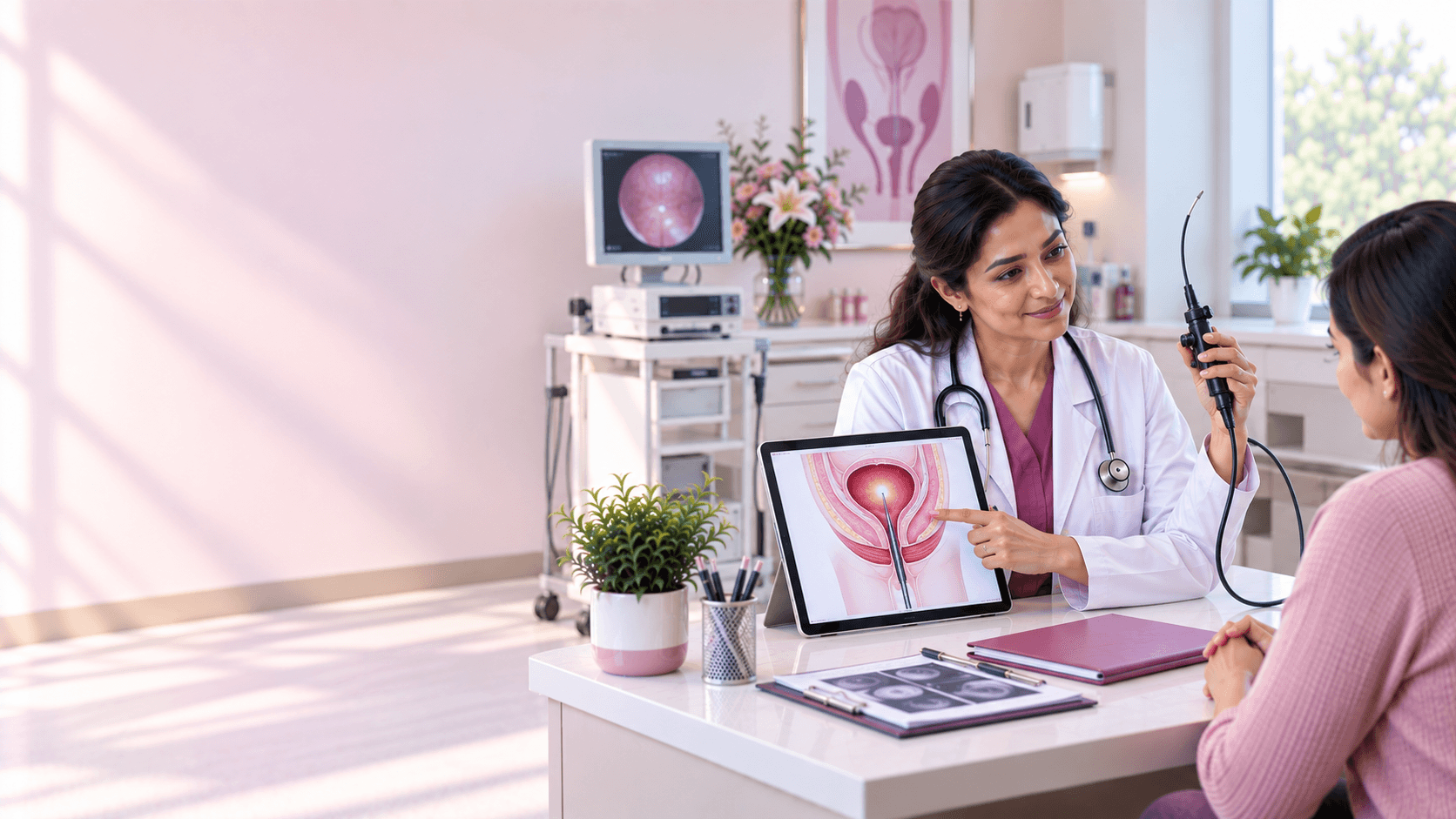
Cystoscopy Procedure — Diagnostic Urologic Examination
Written & medically reviewed by Dr. Shaivalini Kamarapu
MBBS · MS (Obstetrics & Gynaecology) · Fellowship in Reproductive Medicine · 20+ years of clinical experience
20+
Years of Experience
20,000+
Successful Surgeries
30,000+
Happy Families
What is cystoscopy?
A cystoscopy allows the doctor to examine the lining of the bladder as well as the urethra, the tube that carries urine out of your body. A cystoscope is a probe with a light and a camera at the end — it is inserted through the urethra into the bladder so an investigation of the bladder can be performed.
Why do you need a cystoscopy?
To diagnose bladder conditions and diseases such as
Bladder stones
Bladder inflammation
Bladder cancer
To investigate the cause of symptoms such as
Incontinence
Painful urination
Blood in the urine
An overactive bladder
May also be recommended if you're experiencing
Pelvic pain
Frequent urinary tract infections
An overactive bladder
Enlarged prostate gland
Cystoscopy carries a risk of complications, including
Infection
Bleeding
Pain
Signs and symptoms of a complication
Contact your doctor promptly if you experience any of the following after the procedure:
Bright red blood in your urine
A fever over 100°F (38°C)
Pain or burning during urination that lasts more than 2 days
How is the cystoscopy procedure done?
About an hour before the test, you will be given a sedative to help you relax. An IV needle may be placed in a vein in your arm to give you other medicines and fluids. You'll lie on your back with your knees bent and legs apart, with your feet or thighs supported by stirrups. Your genital area will be cleaned with an antiseptic solution, and your abdomen and thighs will be covered with sterile cloths.
After the anaesthetic takes effect, a cystoscope will be inserted into your urethra and slowly moved into your bladder. Sterile water or saline is then injected through the scope to expand the bladder and create a clear view. Medicine may be injected to reduce the chance of infection, and small instruments may be passed through the cystoscope to collect tissue samples for biopsy, which are sent to the laboratory for analysis.