
TubalRecanalizationinHyderabad
Laparoscopic Surgery
Written & medically reviewed by Dr. Shaivalini Kamarapu
MBBS · MS (Obstetrics & Gynaecology) · Fellowship in Reproductive Medicine · 20+ years of clinical experience
0+
Years of Experience
0+
Successful Surgeries
0+
Happy Families
Whatistubalrecanalization?
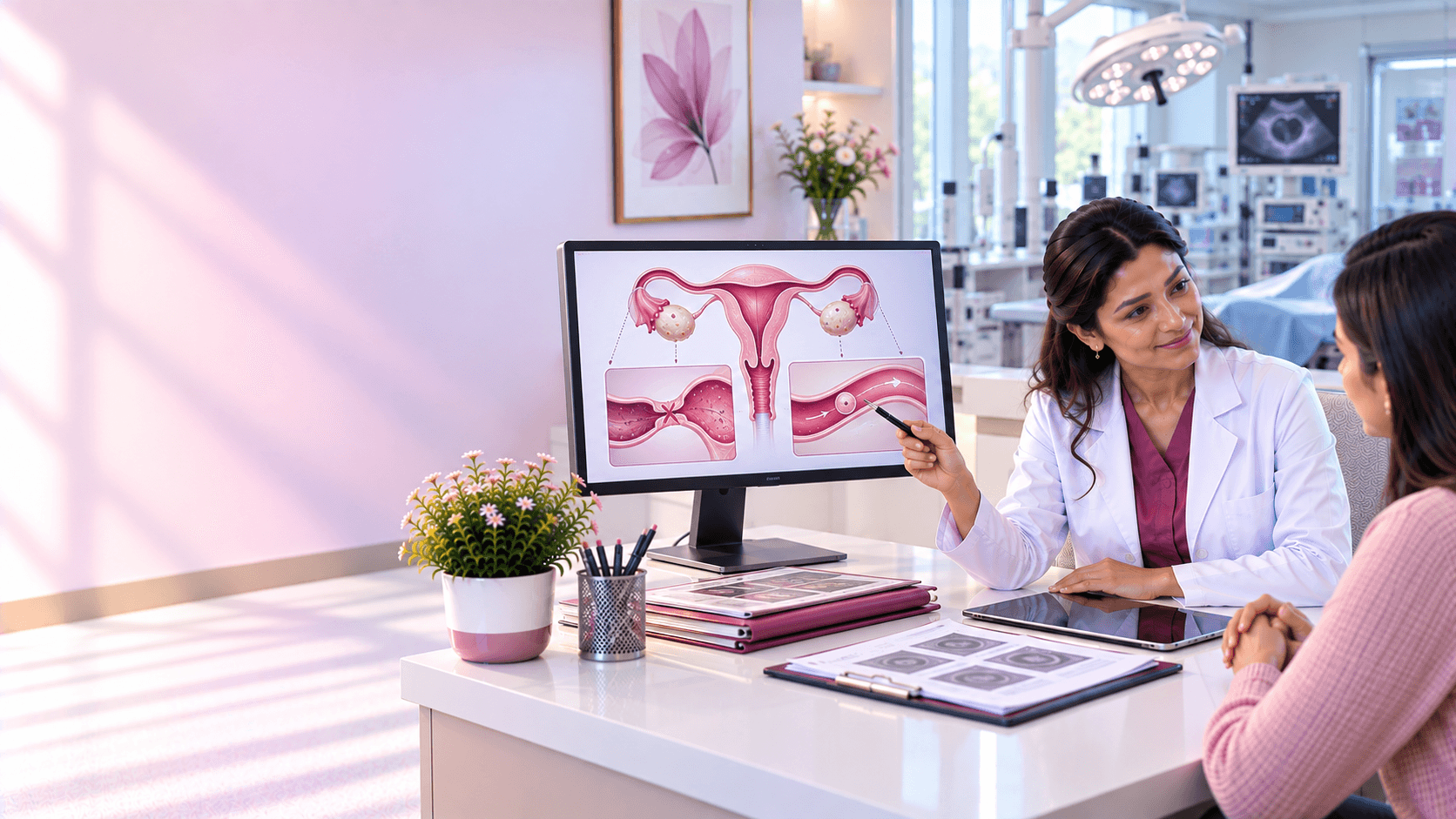
Tubal recanalization — also called fallopian tube reversal — reconnects fallopian tubes that were previously cut or blocked as part of a tubal ligation, restoring the possibility of natural conception for women who've changed their mind about permanent contraception.
Whatarefallopiantubes?
The fallopian tubes connect each ovary to the uterus, and they're where fertilisation actually happens. During ovulation, an egg travels from the ovary into the tube, where sperm can reach and fertilise it; the resulting embryo then travels onward to the uterus for the pregnancy to continue. A cut or blocked tube makes that entire journey impossible.
Blocked tubes are a common cause of infertility more broadly, and can result from infection, sexually transmitted disease, fibroids, or scarring from a previous surgery — not only from a deliberate tubal ligation.
Benefitsoftubalrecanalization
Fertilityworkupbeforeconsideringreversal
Progesterone levels — confirms whether ovulation is occurring
Thyroid function — thyroid issues can independently affect fertility
Prolactin levels — elevated levels can disrupt ovulation
Ovarian reserve testing — assesses remaining egg supply, since this affects the odds of success after reversal
Riskstoconsider
A higher risk of ectopic pregnancy (pregnancy outside the uterus) compared to the general population, since tube function may not be fully restored
The possibility that the reconnected tube narrows or blocks again over time
Standard surgical risks — infection or bleeding at the procedure site
A reaction to local anaesthesia, though uncommon
No guarantee of pregnancy — success depends on tube length and condition after reversal, egg quality, and age
What results can you expect?
Success after tubal recanalization depends heavily on individual factors — how much healthy tube remains after reversal, the woman's age, and overall fertility health. Many women do go on to conceive naturally afterward, but it isn't guaranteed, and your doctor can give a more specific outlook once tube length and condition are assessed during the procedure itself.