
CesareanDelivery—C-SectionBirthProcedure
Written & medically reviewed by Dr. Shaivalini Kamarapu
MBBS · MS (Obstetrics & Gynaecology) · Fellowship in Reproductive Medicine · 20+ years of clinical experience
0+
Years of Experience
0+
Successful Surgeries
0+
Happy Families
Whatiscesareandelivery?
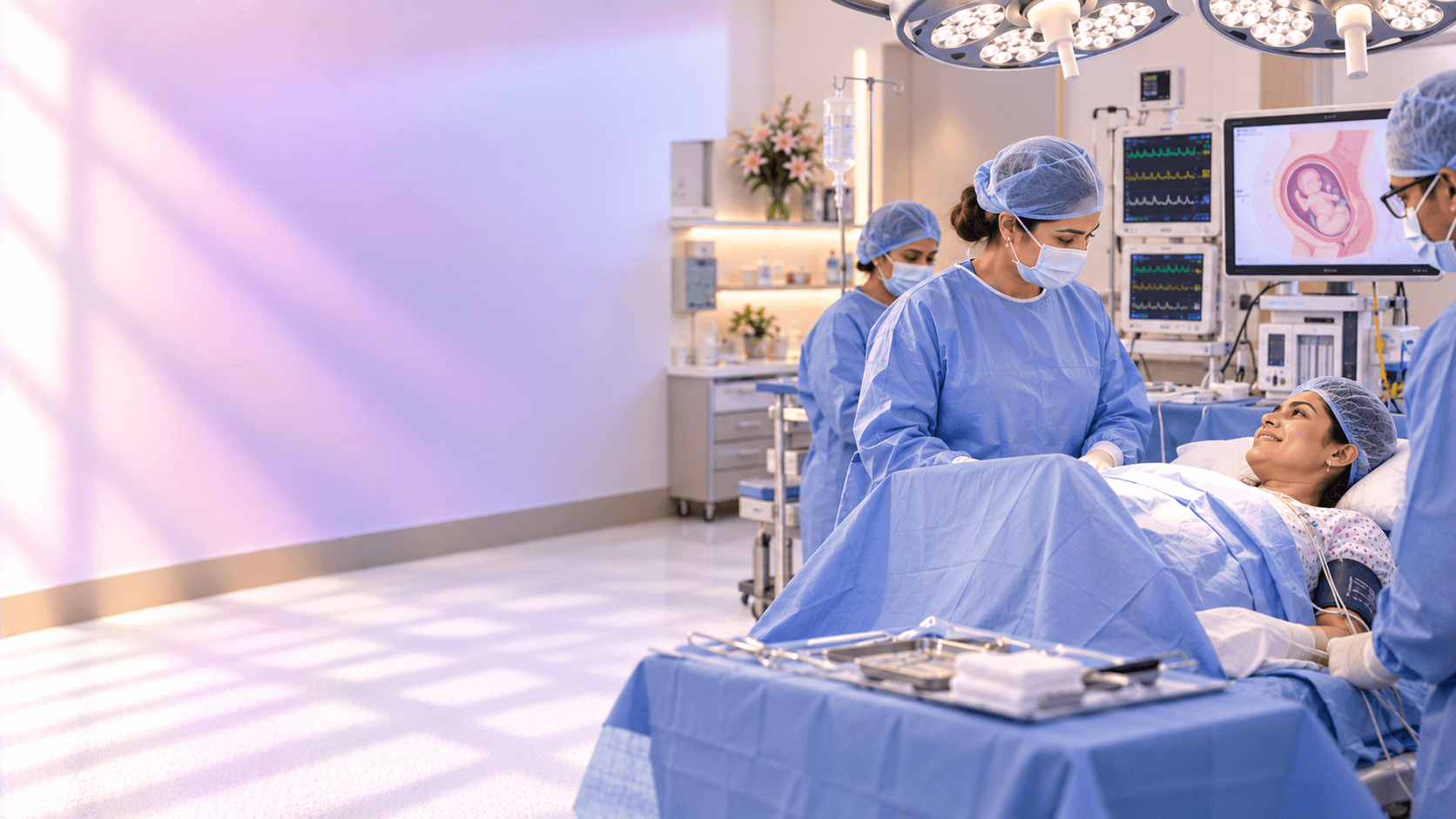
Cesarean delivery — a C-section — is the surgical delivery of a baby through an incision in the mother's abdominal wall and uterus, rather than through the vagina. It's typically performed when there's a complication that makes a normal vaginal delivery unsafe or unlikely to succeed.
Whenisacesareandeliveryneeded?
Cephalopelvic disproportion — the baby's head is larger than the birth canal allows
Placental abnormalities like placenta previa or placenta accreta, where the placenta blocks or obstructs the birth canal
High blood pressure in the mother
Foetal developmental abnormalities
The umbilical cord wrapped around the baby's neck
Improper foetal positioning, such as a breech presentation
Multiple pregnancies (twins or triplets)
Preparingforsurgery
A complete evaluation of the pregnancy to confirm whether a C-section is actually needed
A full discussion of the risks, complications, and benefits with your doctor
Sharing your past and current medical and medication history
Signing a consent form before the procedure
Informing your doctor of any allergies to anaesthetics, latex, or other medications
Emptying your bladder a few hours before the procedure
Fasting for at least 8 hours before surgery
Stepsinvolvedintheprocedure
Pre-surgery preparation
You'll change into a hospital gown and be positioned on the operating table, with an IV line started and a urinary catheter placed to keep the bladder empty.
Site preparation & monitoring
The abdominal area is clipped and sterilised, and an anaesthesiologist monitors your vital signs — heart rate, breathing, blood pressure, and oxygen levels — throughout.
Anaesthesia
Anaesthesia is administered while your vitals are monitored. Depending on the type used, you may remain aware and can sometimes hear or see parts of the process, without feeling pain.
Incision
Once the anaesthetic takes full effect, the surgeon makes a vertical or horizontal incision through the lower abdomen down to the uterine wall, then opens the uterus and amniotic sac.
Delivery
The baby is delivered — you may feel some pulling or pressure during this part — and the umbilical cord is cut before the placenta is removed.
Closure
The uterus and each layer of muscle, fat, and skin are sutured or stapled closed and dressed with sterile bandages.
Monitoring
You're moved to a recovery ward and monitored for 2–4 days to confirm a smooth recovery without complications.
Post-surgeryrecoverycare
A hospital stay of at least 2–4 days is typical
Avoid bending over or lifting heavy weights for at least a month afterward
Take prescribed pain and infection medication exactly as directed
Contact your doctor immediately for cramps, bleeding, or fluid leakage from the incision site
Treatment is available if you feel dizzy, nauseated, or light-headed after delivery
Report fever, chills, severe abdominal cramps, or unusual vaginal discharge right away
Whatdeterminesthecost?
Contact either branch directly for specific cost information.
When a C-section is typically recommended
Complicated pregnancies
Foetal developmental abnormalities
Previous history of a C-section
High blood pressure or other conditions complicating pregnancy
Unfavourable foetal positioning
Active infections such as herpes lesions or HIV
When a normal delivery is preferred instead
The mother's health supports a normal delivery
The baby's position, size, and health are all normal
There are no signs of foetal distress
Risks&complications
Bleeding and infection around the incision site
Injury to internal organs such as the bladder or bowel
Urinary infection or difficulty passing urine
Blood clots
Difficulty delivering vaginally in future pregnancies (rare)
A higher long-term risk of obesity or cardiovascular disease
FAQsrelatedtocesareandelivery
It's considered major surgery, since it involves general or regional anaesthesia and an incision through both the abdominal wall and the uterus.