
VacuumDelivery—AssistedVaginalBirth
Written & medically reviewed by Dr. Shaivalini Kamarapu
MBBS · MS (Obstetrics & Gynaecology) · Fellowship in Reproductive Medicine · 20+ years of clinical experience
0+
Years of Experience
0+
Successful Surgeries
0+
Happy Families
Whatisvacuumdelivery?
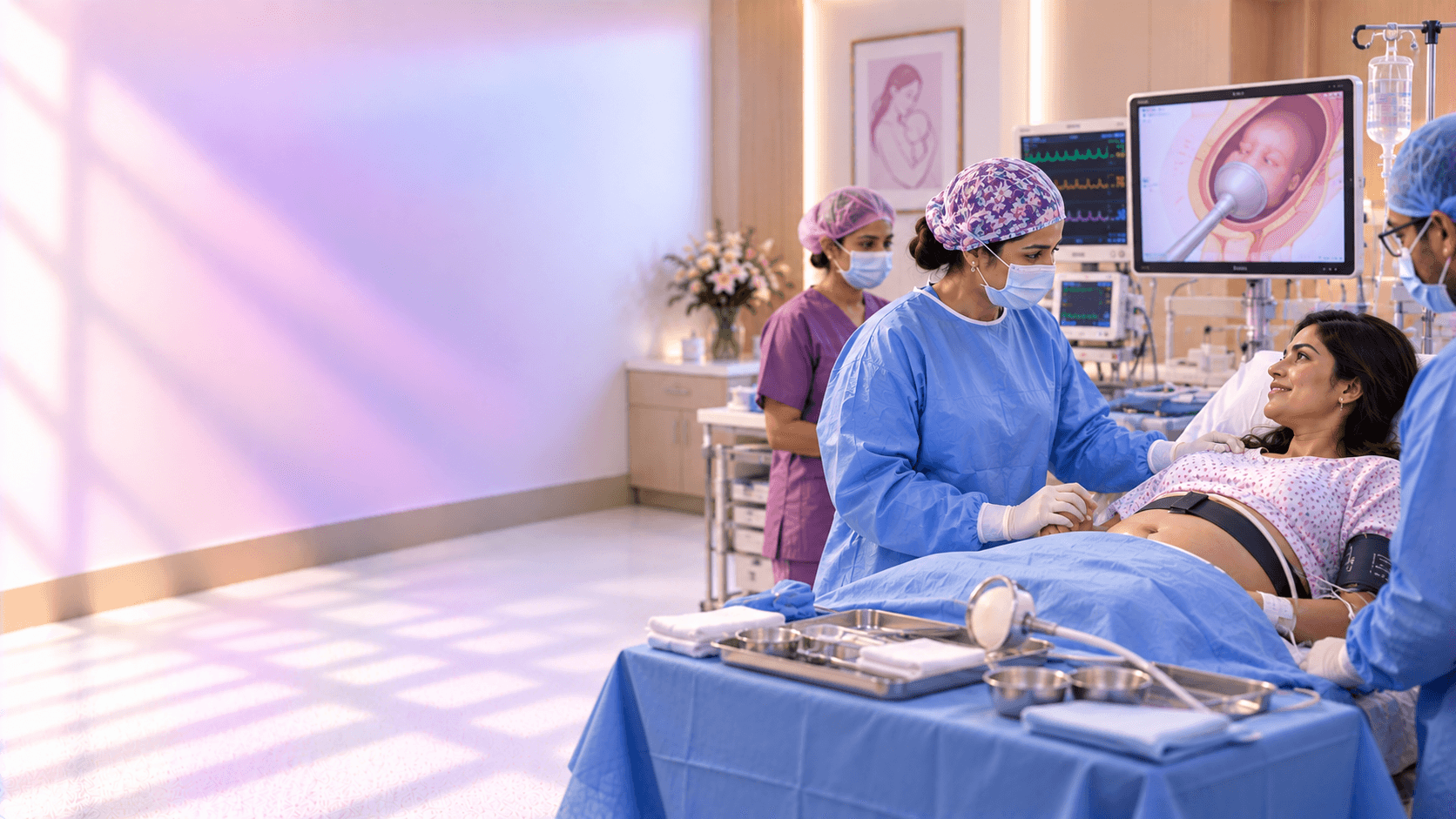
Vacuum extraction — also called a vacuum-assisted delivery — helps guide the baby through the birth canal when labour has stalled. It's used when labour has become prolonged and the mother is experiencing significant stress or difficulty, helping the baby out more quickly. As an alternative to forceps delivery, it can help avoid injury to the baby or the need for a caesarean section.
A soft suction cup is applied to the baby's head, and gentle suction helps guide the baby out through the birth canal. Modern vacuum delivery systems support a smooth, controlled delivery, allowing the obstetrician to make safe, individualised decisions throughout.
Whenandwhyisitdone?
The baby is stuck in the birth canal and labour is no longer progressing despite pushing
The mother is too exhausted to continue pushing
A medical condition — such as a heart condition or very high blood pressure — makes continued pushing risky
The baby is showing signs of foetal distress, including an abnormal heart rate
Riskstothebaby
Scalp swelling, which resolves within a few days
Jaundice (a yellowish skin tone), sometimes requiring light therapy
Shoulder dystocia — the shoulder becoming stuck after the head is delivered
Skull fracture or bleeding within the skull (rare)
Serious injury from a vacuum extraction is rare, and there's no evidence that a successful vacuum-assisted delivery affects a child's later development.
Riskstothemother
Perineal pain
Tears in the vagina or perineum
Short-term difficulty urinating
Short- or long-term incontinence
An episiotomy, to enlarge the vaginal opening enough to place the vacuum
Most of these risks can also occur with an unassisted vaginal delivery. If the vacuum extraction isn't successful, your doctor may need to proceed with a C-section.