
FollicularMonitoring&OvulationTracking
Written & medically reviewed by Dr. Shaivalini Kamarapu
MBBS · MS (Obstetrics & Gynaecology) · Fellowship in Reproductive Medicine · 20+ years of clinical experience
0+
Years of Experience
0+
Successful Surgeries
0+
Happy Families
Follicularmonitoring—ovulationtrackinginIVF
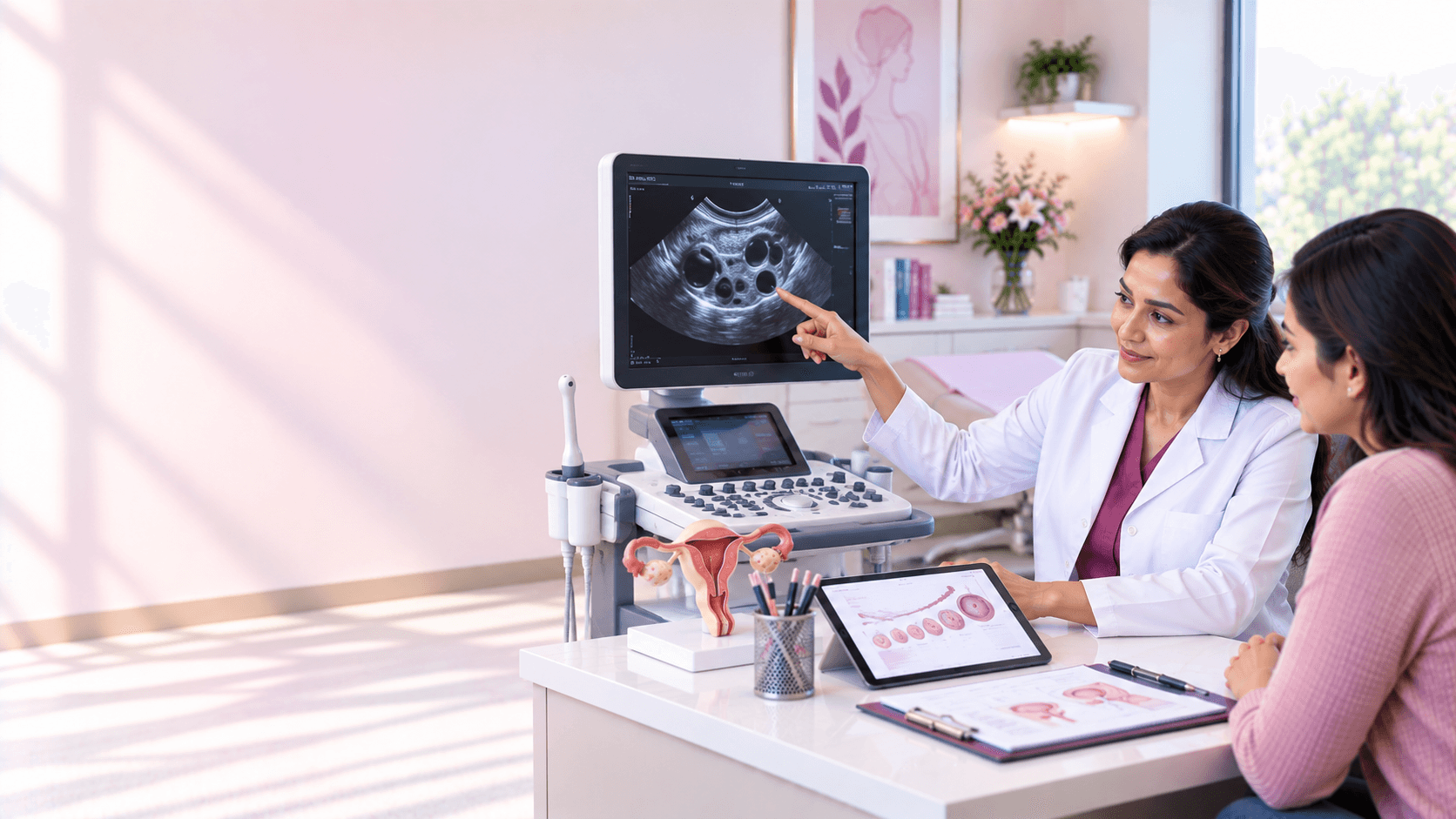
Follicular monitoring — also called a follicular study — is one of the most widely used tests in assisted reproduction. It tracks the ovarian follicles that contain developing eggs, using a transvaginal ultrasound to examine the ovaries, uterus, and uterine lining across the course of a woman's cycle.
The process involves repeated ultrasound scans to pinpoint exactly when an egg is likely to mature and be released — information that then guides advice on natural conception, IUI, or egg collection for IVF, decided on a case-by-case basis.

~5 minutes
Scan duration
8–10
Scans per cycle
Day 9–20
Typical monitoring window
What is a follicular study?
Every woman is born with millions of immature eggs. During ovulation, one mature egg is released from the ovary into the fallopian tube, where it becomes available for fertilisation, while the uterine lining thickens in preparation for a possible pregnancy. If conception doesn't happen, that lining sheds as a period.
Featuresoffollicularmonitoring
Serial ultrasound monitoring tracks the maturation status of developing eggs
Assesses follicle size, which supports healthy egg growth
Measures uterine lining thickness alongside follicle development
Helps track response to fertility medication for women undergoing treatment
Guides dosage adjustments for fertility medication if the response is inadequate
Whatisitusedfor?
A follicular study helps determine the size of active follicles in the ovaries and predicts ovulation timing, so couples can time intercourse for natural conception. If fertility treatment is involved, the same scan tells the doctor when an egg is ready to be collected for fertilisation.
Howisafollicularstudydone?
The scan is performed with a small plastic probe inserted into the vagina, capturing images of the ovaries and uterus for analysis. By studying the follicles and the thickness of the endometrial lining, the doctor can estimate the approximate window when ovulation is likely to occur.
Whoshouldgetafollicularstudy?
Any woman trying to conceive can have a follicle scan, but it's most often recommended as a first step for couples who haven't conceived after more than a year of unprotected intercourse — particularly if either of the following applies:
Couples who haven't conceived after more than a year of trying
Women who aren't sure when — or whether — they're ovulating
Whatelsecanafollicularscandetect?
A follicular study can also flag issues that might otherwise stand in the way of conception, including:
Follicles that don't grow properly before rupturing
Uterine lining that doesn't thicken appropriately alongside follicle release
Follicles that fail to grow at all, or don't rupture at the right time